
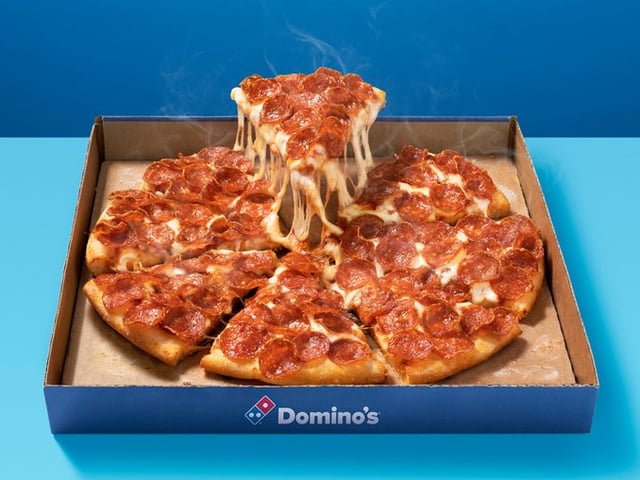
Calories Pepperoni Pizza Domino’s: A Deep Dive into Nutritional Facts & Choices
Craving a slice of Domino’s pepperoni pizza but curious about the calorie count? You’re not alone. Millions of pizza lovers grapple with balancing their cravings and health goals. This comprehensive guide provides an expert, in-depth look at the calories in pepperoni pizza from Domino’s. We’ll go far beyond simple numbers, exploring serving sizes, crust variations, topping impacts, and healthy eating strategies. Our goal is to empower you with the knowledge to make informed choices and enjoy your pizza guilt-free. We aim to give you the most comprehensive information available for calories pepperoni pizza domino’s.
Understanding Calories in Domino’s Pepperoni Pizza: A Comprehensive Overview
When we talk about calories pepperoni pizza Domino’s, it’s crucial to understand that the actual number can vary significantly based on several factors. This isn’t just about the size of the slice, but also the crust type, the amount of pepperoni, and any extra toppings you might add. For example, a hand-tossed slice will differ drastically from a Brooklyn-style slice, and a pizza loaded with extra cheese will have a higher calorie count than one with light cheese. This section will break down these variables to give you a clearer picture.
The Calorie Concept: A Quick Refresher
Before diving into the specifics of Domino’s pepperoni pizza, let’s quickly recap what a calorie actually is. A calorie is a unit of energy. Your body needs energy to function, and you get that energy from the food and drinks you consume. When you eat more calories than your body burns, the excess is stored as fat, leading to weight gain. Understanding this basic principle is essential for managing your calorie intake and making informed dietary choices.
Domino’s Pizza Crust Types and Calorie Differences
Domino’s offers several crust options, each with its own unique calorie profile. Here’s a breakdown:
- Hand Tossed: This is Domino’s classic crust, offering a balance between thickness and crispness.
- Handmade Pan: A thicker, doughier crust baked in a pan, resulting in a soft and chewy texture.
- Brooklyn Style: A thinner, crispier crust with a more rustic, hand-stretched appearance.
- Crunchy Thin Crust: The thinnest and crispiest option, often lower in calories than other crusts.
The Handmade Pan crust typically has the highest calorie count per slice due to its thickness and higher fat content. The Crunchy Thin Crust generally has the lowest. The Hand Tossed and Brooklyn Style fall somewhere in between, with the Brooklyn Style often being slightly lower due to its thinner profile. Always check Domino’s nutritional information for the most accurate data, as formulations may change.
Pepperoni and Other Toppings: Calorie Contributors
Pepperoni, while delicious, is a significant source of calories and fat in Domino’s pepperoni pizza. The amount of pepperoni used per slice can vary, impacting the overall calorie count. Additional toppings like extra cheese, vegetables, or other meats will further alter the nutritional profile. Consider the amount of cheese and the type of meats. Adding vegetables such as peppers, onions, and mushrooms can increase the nutritional value while keeping the calories lower.
Serving Sizes and Calorie Calculations
Domino’s typically cuts its pizzas into 6 or 8 slices, depending on the size. It’s crucial to know the serving size you’re consuming. A large pizza may seem like a good deal, but if you’re eating multiple slices, the calorie count can quickly add up. Understanding the portion size and the corresponding calorie count is vital for managing your intake. Always consult the Domino’s website or app for the most accurate nutritional information related to serving sizes.
Domino’s Pizza Nutritional Information: A Closer Look
Domino’s provides detailed nutritional information for all its menu items, including its pizzas. This information is readily available on their website and mobile app. Accessing and understanding this data is essential for making informed choices about your calorie intake. This section will guide you on how to find and interpret Domino’s nutritional information.
Navigating Domino’s Website and App for Calorie Information
Domino’s website and app are user-friendly and provide easy access to nutritional data. Simply navigate to the menu section, select the pizza you’re interested in (in this case, pepperoni pizza), and look for the “Nutrition” or “Nutritional Information” link. This will typically open a PDF or display a table with detailed calorie counts, macronutrient breakdowns, and other important nutritional facts. Many times Domino’s allows you to customize the pizza and see the updated calorie count.
Understanding the Nutritional Label: What to Look For
When reviewing the nutritional label for Domino’s pepperoni pizza, pay attention to the following:
- Serving Size: This is the amount of pizza the nutritional information refers to (e.g., one slice).
- Calories: The total number of calories per serving.
- Fat: The total fat content, including saturated and trans fats.
- Carbohydrates: The total carbohydrate content, including sugars and fiber.
- Protein: The total protein content.
- Sodium: The sodium content, which can be high in pizza.
Focus on the calorie count per slice, the amount of fat (especially saturated fat), and the sodium content. These are the key factors to consider when making healthy choices.
Customizing Your Pizza: Calorie Implications
Domino’s allows you to customize your pizza with various toppings, sauces, and crusts. Each customization can significantly impact the calorie count. Use Domino’s online ordering system to experiment with different combinations and see how they affect the nutritional information. For instance, opting for light cheese, adding vegetables, or choosing a thin crust can all help reduce the overall calorie count.
Healthy Eating Strategies for Enjoying Domino’s Pepperoni Pizza
Enjoying Domino’s pepperoni pizza doesn’t have to derail your health goals. With a few smart strategies, you can indulge in your craving while minimizing the impact on your calorie intake and overall health. This section will provide practical tips and techniques for making healthier choices when ordering and eating Domino’s pepperoni pizza.
Choosing Healthier Crust Options
As mentioned earlier, the crust type significantly affects the calorie count. Opt for thinner crusts like the Brooklyn Style or Crunchy Thin Crust to reduce your calorie intake compared to thicker crusts like the Handmade Pan. These thinner crusts often have fewer carbohydrates and less fat, making them a healthier choice.
Loading Up on Vegetables
Adding vegetables to your pizza is a great way to boost its nutritional value and add volume without significantly increasing the calorie count. Consider adding toppings like mushrooms, onions, peppers, spinach, or tomatoes. These vegetables provide essential vitamins, minerals, and fiber, making your pizza a more balanced meal.
Opting for Light Cheese or Lower-Fat Cheese Options
Cheese is a major source of calories and fat in pizza. Ask for light cheese or explore lower-fat cheese options if available. This simple change can significantly reduce the overall calorie and fat content of your pizza. You can also consider skipping the cheese on some slices to further reduce your intake.
Practicing Portion Control
Portion control is key to enjoying Domino’s pepperoni pizza without overdoing it. Stick to one or two slices and avoid eating the entire pizza in one sitting. Use a smaller plate to visually control your portion size and be mindful of your hunger cues. Eating slowly and savoring each bite can also help you feel satisfied with a smaller portion.
Balancing Your Meal with a Side Salad
Complement your Domino’s pepperoni pizza with a side salad to add more nutrients and fiber to your meal. Choose a salad with plenty of vegetables and a light dressing. This will help you feel fuller and more satisfied, reducing the temptation to overeat on pizza.
Being Mindful of Sauce and Extra Toppings
Be mindful of the sauce and any extra toppings you add to your pizza. Heavy sauces and high-fat toppings like extra pepperoni or sausage can significantly increase the calorie count. Opt for lighter sauces like marinara or pesto, and choose leaner protein options like grilled chicken or shrimp if available.
Domino’s Pizza and Weight Management: Expert Advice
Can you enjoy Domino’s pepperoni pizza while still managing your weight? The answer is yes, but it requires a strategic approach. This section will provide expert advice on how to incorporate Domino’s pizza into a healthy weight management plan.
Understanding Calorie Deficit and Weight Loss
Weight loss occurs when you burn more calories than you consume, creating a calorie deficit. To lose one pound of fat, you need to create a deficit of approximately 3,500 calories. Understanding this principle is essential for managing your weight and making informed choices about your diet. You can still enjoy Domino’s pepperoni pizza as part of a calorie-controlled diet, as long as you account for the calories and adjust your other meals accordingly.
Planning Your Meals Around Pizza Night
If you know you’ll be having Domino’s pepperoni pizza for dinner, plan your other meals accordingly. Opt for lighter, lower-calorie options for breakfast and lunch to balance out your calorie intake. For example, you could have a smoothie for breakfast, a salad for lunch, and then enjoy a couple of slices of pizza for dinner. This will help you stay within your calorie goals for the day.
Tracking Your Calorie Intake
Tracking your calorie intake is a valuable tool for weight management. Use a food diary, a mobile app, or an online calorie tracker to monitor your daily calorie consumption. This will help you stay aware of your intake and make informed choices about your meals and snacks. When you track your calories, be sure to include the calories from your Domino’s pepperoni pizza.
Incorporating Physical Activity
Physical activity is an important component of weight management. Regular exercise helps you burn calories, build muscle, and improve your overall health. Aim for at least 30 minutes of moderate-intensity exercise most days of the week. This could include activities like walking, jogging, swimming, cycling, or dancing. Incorporating physical activity into your routine will help you burn off the extra calories from your Domino’s pepperoni pizza.
Consulting with a Registered Dietitian
If you’re struggling to manage your weight or have specific dietary needs, consider consulting with a registered dietitian. A registered dietitian can provide personalized advice and guidance on how to incorporate Domino’s pepperoni pizza into a healthy and balanced diet. They can also help you develop a weight management plan that meets your individual needs and goals.
Domino’s Pizza Alternatives: Healthier Options to Consider
While Domino’s pepperoni pizza can be enjoyed in moderation, there are also healthier alternatives to consider if you’re looking to reduce your calorie intake or improve your overall diet. This section will explore some of these options.
Homemade Pizza: Control Over Ingredients and Calories
Making your own pizza at home gives you complete control over the ingredients and calorie count. You can choose a whole-wheat crust, use low-fat cheese, load up on vegetables, and use a lighter sauce. This allows you to create a healthier and more nutritious pizza that fits your dietary needs.
Grilled Chicken or Veggie Pizza
Ordering a pizza with grilled chicken or vegetables instead of pepperoni can significantly reduce the calorie and fat content. Grilled chicken is a lean protein source, while vegetables are packed with vitamins, minerals, and fiber. This makes for a more balanced and nutritious pizza option.
Salad with Pizza Toppings
If you’re craving the flavors of pizza but want to avoid the high calorie count, try making a salad with pizza toppings. Use a bed of lettuce or spinach as your base, and add toppings like tomatoes, onions, peppers, mushrooms, and a sprinkle of cheese. Drizzle with a light vinaigrette dressing for a flavorful and healthy meal.
Cauliflower Crust Pizza
Cauliflower crust pizza is a low-carbohydrate and gluten-free alternative to traditional pizza crust. It’s made from cauliflower, cheese, and eggs, and provides a good source of fiber and nutrients. You can find cauliflower crusts at most grocery stores or make your own at home.
Expert Review: Domino’s Pepperoni Pizza – A Balanced Perspective
Let’s provide a balanced, in-depth review of Domino’s Pepperoni Pizza to help you make informed decisions. This review is based on nutritional information, user experience, and expert opinions.
User Experience & Usability
Ordering from Domino’s is generally a seamless experience. Their website and app are user-friendly, allowing for easy customization and ordering. Delivery is usually prompt and reliable. The pizza arrives hot and ready to eat.
Performance & Effectiveness
Domino’s Pepperoni Pizza delivers on its promise of a quick, convenient, and tasty meal. The flavor is consistent, and the ingredients are generally of good quality. However, it’s important to be mindful of the calorie and sodium content, especially if you’re watching your weight or have specific dietary needs.
Pros:
- Convenience: Domino’s offers fast and easy ordering and delivery.
- Taste: The pepperoni pizza has a classic, satisfying flavor.
- Customization: You can customize your pizza with various toppings and crusts.
- Nutritional Information: Domino’s provides detailed nutritional information on their website and app.
- Availability: Domino’s is widely available, making it a convenient option for many people.
Cons/Limitations:
- High Calorie Content: Pepperoni pizza can be high in calories, especially when loaded with extra toppings.
- High Sodium Content: Pizza is generally high in sodium, which can be a concern for people with high blood pressure.
- Processed Ingredients: Domino’s pizza contains processed ingredients, which may not be ideal for everyone.
- Limited Nutritional Value: While pizza can provide some nutrients, it’s not the most nutrient-dense food option.
Ideal User Profile:
Domino’s Pepperoni Pizza is best suited for people who are looking for a quick, convenient, and tasty meal option. It’s also a good choice for social gatherings and parties. However, it’s important to be mindful of the calorie and sodium content and to enjoy it in moderation.
Key Alternatives:
- Homemade Pizza: Allows for greater control over ingredients and calories.
- Grilled Chicken or Veggie Pizza: A healthier alternative with leaner protein and more vegetables.
Expert Overall Verdict & Recommendation:
Domino’s Pepperoni Pizza can be a satisfying and enjoyable meal option when consumed in moderation. It’s important to be mindful of the calorie and sodium content and to make smart choices about crusts, toppings, and portion sizes. Consider adding vegetables and opting for leaner protein sources to improve the nutritional value. Overall, Domino’s Pepperoni Pizza is a good choice for occasional indulgence, but it shouldn’t be a staple of your diet.
Insightful Q&A Section: Your Burning Questions Answered
-
Q: How many calories are in one slice of Domino’s pepperoni pizza (hand-tossed, large)?
A: The calorie count can vary, but generally, one slice of a large, hand-tossed Domino’s pepperoni pizza contains approximately 300-350 calories. Always check the Domino’s website for the most accurate information.
-
Q: Is Domino’s pepperoni pizza a good source of protein?
A: While pepperoni pizza does contain some protein, it’s not considered a primary source. The protein comes from the cheese and pepperoni. Focus on lean meats, beans, and other sources to fulfill daily protein needs.
-
Q: How can I reduce the calorie count of my Domino’s pepperoni pizza order?
A: Opt for a thinner crust, ask for light cheese, add vegetables, and practice portion control.
-
Q: What is the sodium content of Domino’s pepperoni pizza?
A: Domino’s pepperoni pizza is relatively high in sodium. One slice can contain upwards of 600-800mg of sodium. Check the Domino’s website for exact figures.
-
Q: Are there any gluten-free options for Domino’s pepperoni pizza?
A: Domino’s offers a gluten-free crust option, but it’s important to note that it may not be suitable for individuals with severe gluten allergies due to potential cross-contamination.
-
Q: How does the Brooklyn Style crust compare in calories to the Hand Tossed crust?
A: The Brooklyn Style crust is typically thinner and crispier, resulting in a slightly lower calorie count compared to the Hand Tossed crust.
-
Q: Can I order a half-pepperoni, half-veggie pizza to balance my meal?
A: Yes, ordering a half-and-half pizza is a great way to balance your meal and add more vegetables to your diet.
-
Q: What are some healthy side dish options to pair with Domino’s pepperoni pizza?
A: A side salad with a light vinaigrette dressing or steamed vegetables are healthy side dish options.
-
Q: How does Domino’s nutritional information compare to other pizza chains?
A: Domino’s nutritional information is generally comparable to other major pizza chains. It’s important to check the specific nutritional information for each chain and pizza type.
-
Q: Is it okay to eat Domino’s pepperoni pizza if I’m trying to lose weight?
A: Yes, you can enjoy Domino’s pepperoni pizza in moderation as part of a calorie-controlled diet. Focus on portion control and making healthier choices about crusts, toppings, and side dishes.
Conclusion: Making Informed Choices About Calories in Domino’s Pepperoni Pizza
Understanding the calories in pepperoni pizza Domino’s empowers you to make informed choices and enjoy your favorite meal guilt-free. By considering crust types, toppings, portion sizes, and healthy eating strategies, you can incorporate Domino’s pepperoni pizza into a balanced diet. Remember to consult Domino’s website for the most accurate nutritional information and to practice moderation.
Now that you’re armed with this expert knowledge, share your experiences with enjoying Domino’s pepperoni pizza in a healthy way in the comments below! Explore our other guides for more nutritional insights and healthy eating tips. For personalized advice, contact our experts for a consultation on creating a balanced diet that includes your favorite foods.