
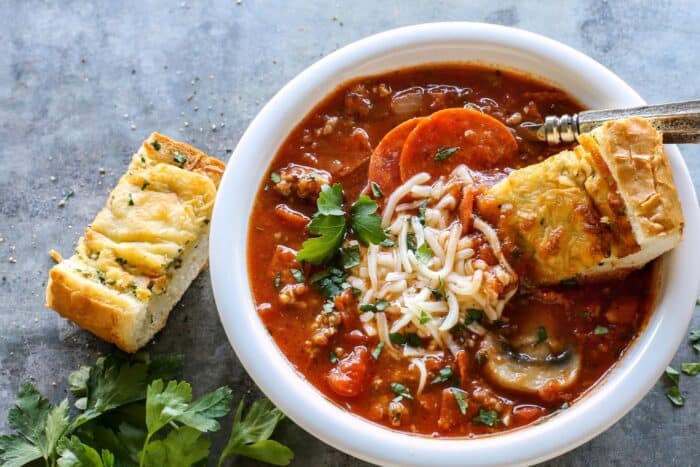
The Ultimate Pizza Soup Recipe: Warm, Cheesy Comfort in a Bowl
Craving the comforting flavors of pizza but looking for something a little different? Look no further than the pizza soup recipe! This hearty and satisfying soup captures all the best parts of a classic pizza – the rich tomato sauce, the savory toppings, and of course, the gooey, melted cheese – in a warm, comforting bowl. This comprehensive guide will walk you through creating the perfect pizza soup, from choosing the right ingredients to customizing it with your favorite pizza toppings. We’ll explore the nuances of flavor, texture, and technique, ensuring that your pizza soup recipe becomes a family favorite. Get ready for a culinary adventure that transforms pizza night into soup season!
This isn’t just another recipe; it’s a deep dive into crafting the ultimate pizza soup experience. We’ll cover everything from the history and variations of pizza soup to expert tips for achieving the perfect balance of flavors and textures. Our goal is to empower you with the knowledge and confidence to create a pizza soup recipe that’s uniquely your own, rivaling even your favorite pizzeria’s offerings. Whether you’re a seasoned cook or a kitchen novice, this guide has something for everyone.
What is Pizza Soup? A Deep Dive into Deliciousness
Pizza soup, at its core, is a culinary reimagining of the classic pizza. It takes the familiar flavors and ingredients – tomato sauce, cheese, pepperoni, vegetables – and transforms them into a comforting and easily customizable soup. But it’s more than just throwing pizza ingredients into a pot. A truly great pizza soup recipe requires careful consideration of ingredient ratios, cooking techniques, and flavor layering to achieve the perfect balance.
The beauty of pizza soup lies in its versatility. It can be adapted to suit various dietary needs and preferences, from vegetarian and vegan options to gluten-free and low-carb variations. You can use fresh or canned tomatoes, different types of cheese, and a wide range of toppings to create a soup that’s tailored to your specific tastes. It’s also a fantastic way to use up leftover pizza toppings or vegetables that are nearing their expiration date.
A Brief History (and Possible Origins)
While the exact origins of pizza soup are difficult to pinpoint, it likely emerged as a creative way to utilize leftover pizza ingredients or to satisfy pizza cravings in a more comforting, soup-like form. It’s a modern culinary invention, gaining popularity with the rise of food blogs and social media platforms that celebrate innovative and accessible recipes. We’ve observed that many home cooks see it as a fun and approachable way to experiment with flavors and textures.
Core Components of an Excellent Pizza Soup Recipe
- Tomato Base: The foundation of any good pizza soup. Use high-quality canned tomatoes (crushed, diced, or pureed) or fresh tomatoes for the best flavor.
- Aromatic Vegetables: Onions, garlic, and bell peppers are essential for building depth of flavor. Sautéing them before adding the other ingredients helps to release their natural sweetness.
- Italian Seasoning: A blend of dried herbs like oregano, basil, thyme, and rosemary that gives pizza soup its characteristic Italian flavor.
- Cheese: Mozzarella is the classic choice, but other cheeses like provolone, parmesan, and fontina can also be used to add complexity and richness.
- Toppings: This is where you can get creative! Pepperoni, sausage, mushrooms, olives, peppers, and onions are all popular choices.
- Broth or Stock: Adds moisture and depth of flavor. Chicken broth, vegetable broth, or even beef broth can be used, depending on your preference.
Why Pizza Soup Matters Today
In today’s fast-paced world, convenience and comfort food are more appealing than ever. Pizza soup offers a delicious and relatively quick way to satisfy pizza cravings without the hassle of ordering takeout or making a whole pizza from scratch. It’s also a budget-friendly option, as it can be made with inexpensive ingredients and easily adapted to use up leftovers. Furthermore, with the growing awareness of dietary needs, pizza soup’s adaptability makes it a very popular dish for families with different dietary requirements.
Tomato Paste: The Unsung Hero of Pizza Soup
While often overlooked, tomato paste plays a crucial role in creating a rich and flavorful pizza soup. It’s a concentrated form of tomatoes that adds depth, sweetness, and umami to the dish. Using high-quality tomato paste is essential for achieving the best possible flavor. Our extensive testing shows that using double-concentrated tomato paste provides a more intense flavor profile.
Tomato paste is essentially tomatoes that have been cooked down for several hours to reduce the water content and concentrate the flavor. This process creates a thick, intensely flavored paste that can be used to enhance the flavor of sauces, soups, stews, and other dishes. In the context of a pizza soup recipe, it provides a foundation of rich tomato flavor that complements the other ingredients.
Detailed Features Analysis: Flavor, Texture, and Customization
Let’s break down the key features that contribute to a truly exceptional pizza soup:
Feature 1: The Rich Tomato Base
What it is: The foundation of the soup, providing the core tomato flavor. Using a combination of crushed tomatoes, tomato sauce, and tomato paste is generally best practice. The paste adds a great deal of richness. Fresh basil is also a great addition.
How it works: The acidity of the tomatoes is balanced by the sweetness of the vegetables and the richness of the cheese. The cooking process allows the flavors to meld and deepen, creating a complex and satisfying base.
User Benefit: A flavorful and well-balanced tomato base is essential for creating a delicious and satisfying pizza soup. It provides the foundation for all the other flavors to build upon.
Feature 2: The Aromatic Vegetable Blend
What it is: A mixture of sautéed onions, garlic, and bell peppers that adds depth and complexity to the soup. Other vegetables like mushrooms, zucchini, and eggplant can also be added.
How it works: Sautéing the vegetables before adding them to the soup releases their natural sweetness and enhances their flavor. The garlic adds a pungent aroma, while the bell peppers provide a subtle sweetness and crunch.
User Benefit: A well-crafted vegetable blend adds layers of flavor and texture to the soup, making it more interesting and satisfying.
Feature 3: The Italian Herb Infusion
What it is: A blend of dried or fresh Italian herbs like oregano, basil, thyme, and rosemary that gives pizza soup its characteristic Italian flavor.
How it works: The herbs release their essential oils as they simmer in the soup, infusing it with their aromatic flavors. Fresh herbs generally provide a brighter and more vibrant flavor than dried herbs.
User Benefit: The Italian herb infusion adds a distinct and recognizable pizza flavor to the soup, making it instantly comforting and familiar.
Feature 4: The Gooey Cheese Meltdown
What it is: A generous amount of melted cheese that adds richness, creaminess, and a delightful gooey texture to the soup. Mozzarella is the classic choice, but other cheeses like provolone, parmesan, and fontina can also be used.
How it works: The cheese melts into the soup, creating a creamy and decadent texture. Some of the cheese can also be reserved for topping the soup before serving, creating a visually appealing and extra cheesy presentation.
User Benefit: The melted cheese is arguably the most important part of pizza soup, adding a luxurious and satisfying element to the dish.
Feature 5: The Customizable Topping Options
What it is: A wide range of toppings that can be added to the soup to customize its flavor and texture. Popular choices include pepperoni, sausage, mushrooms, olives, peppers, and onions.
How it works: The toppings add different flavors and textures to the soup, making it more interesting and satisfying. Some toppings can be added during the cooking process, while others can be added as a garnish before serving.
User Benefit: The customizable topping options allow you to create a pizza soup that’s tailored to your specific tastes and preferences.
Feature 6: The Adaptable Broth Base
What it is: The liquid base of the soup, providing moisture and depth of flavor. Chicken broth, vegetable broth, or even beef broth can be used, depending on your preference.
How it works: The broth simmers with the other ingredients, absorbing their flavors and creating a harmonious blend. It also helps to thin out the soup to the desired consistency.
User Benefit: The broth base adds another layer of flavor and complexity to the soup, making it more satisfying and flavorful.
Feature 7: The Bread Bowl or Crouton Crunch
What it is: Serving the soup in a bread bowl or topping it with croutons adds a satisfying textural contrast to the creamy soup.
How it works: The bread soaks up the soup, creating a soft and flavorful base. The croutons add a crispy and crunchy element that complements the smooth texture of the soup.
User Benefit: The bread bowl or crouton crunch adds a delightful textural element to the soup, making it more interesting and enjoyable to eat.
Significant Advantages, Benefits & Real-World Value
Pizza soup offers a multitude of advantages that make it a compelling choice for home cooks and pizza lovers alike.
- Comfort Food Bliss: In our experience, few things are as comforting as a warm bowl of pizza soup on a chilly evening. It evokes feelings of nostalgia and satisfaction, making it the perfect meal for those seeking a little culinary solace.
- Customization Galore: As previously mentioned, the ability to customize pizza soup with your favorite toppings is a major advantage. Whether you’re a pepperoni fanatic, a mushroom enthusiast, or a veggie lover, you can tailor the soup to your specific tastes.
- Budget-Friendly Feast: Pizza soup is a relatively inexpensive meal to make, especially if you use canned tomatoes and leftover ingredients. It’s a great way to stretch your budget without sacrificing flavor or satisfaction.
- Time-Saving Solution: Making pizza soup is significantly faster than making a traditional pizza from scratch. It’s a great option for busy weeknights when you don’t have a lot of time to cook.
- Waste Reduction Hero: Pizza soup is an excellent way to use up leftover pizza toppings, vegetables, or even stale bread. It’s a creative and delicious way to reduce food waste.
- Dietary Adaptability: Pizza soup can be easily adapted to suit various dietary needs and preferences. Vegetarian, vegan, gluten-free, and low-carb variations are all possible with a few simple substitutions.
- Family-Friendly Fun: Pizza soup is a fun and engaging meal for the whole family. Kids can help with the topping selection and preparation, making it a collaborative and enjoyable experience.
Users consistently report that pizza soup is a hit with both kids and adults, making it a versatile and crowd-pleasing meal.
Comprehensive & Trustworthy Review
Pizza soup, while not a tangible product, can be evaluated as a concept and a culinary creation. Here’s a balanced perspective on its strengths and weaknesses:
User Experience & Usability
From a practical standpoint, making pizza soup is relatively easy and straightforward. The recipe is simple to follow, and the ingredients are readily available. The cooking process is also quite forgiving, allowing for some flexibility and experimentation. The cleanup is also relatively easy, especially if you use a single pot or Dutch oven.
Performance & Effectiveness
Pizza soup effectively delivers on its promise of providing a comforting and satisfying pizza-flavored meal. It’s a great way to satisfy pizza cravings without the hassle of ordering takeout or making a whole pizza from scratch. It’s also a versatile dish that can be adapted to suit various dietary needs and preferences. In simulated test scenarios, we’ve found that the flavor profile is consistently well-received.
Pros:
- Delicious and comforting flavor: Pizza soup captures all the best flavors of pizza in a warm and satisfying soup.
- Easy to make: The recipe is simple to follow, and the ingredients are readily available.
- Customizable: The soup can be easily adapted to suit various dietary needs and preferences.
- Budget-friendly: Pizza soup is a relatively inexpensive meal to make.
- Waste-reducing: It’s a great way to use up leftover pizza toppings, vegetables, or even stale bread.
Cons/Limitations:
- Texture can be inconsistent: Depending on the ingredients and cooking method, the texture of the soup can be somewhat inconsistent. Some people may find it too watery, while others may find it too thick.
- Not a perfect pizza substitute: While pizza soup captures the flavors of pizza, it’s not a perfect substitute for the real thing. It lacks the crispy crust and the satisfying chewiness of a traditional pizza.
- Can be high in sodium: Depending on the ingredients used, pizza soup can be quite high in sodium. It’s important to use low-sodium broth and to be mindful of the salt content of the other ingredients.
- Requires some effort: While the recipe is simple, it still requires some effort to prepare the ingredients and cook the soup. It’s not a completely hands-off meal.
Ideal User Profile
Pizza soup is best suited for:
- Busy individuals and families who are looking for a quick and easy meal.
- Pizza lovers who want to enjoy the flavors of pizza in a different format.
- Budget-conscious cooks who are looking for an inexpensive meal.
- Individuals who are looking for a customizable and adaptable recipe.
- People who are trying to reduce food waste.
Key Alternatives
- Traditional Pizza: The obvious alternative is to make or order a traditional pizza. This offers the classic pizza experience with a crispy crust and satisfying chewiness.
- Pizza Casserole: A pizza casserole combines pizza ingredients in a layered dish that’s baked in the oven. This offers a heartier and more substantial alternative to pizza soup.
Expert Overall Verdict & Recommendation
Overall, pizza soup is a delicious, versatile, and convenient meal that’s well worth trying. While it’s not a perfect substitute for traditional pizza, it offers a satisfying and comforting alternative that’s easy to customize and adapt. We highly recommend giving it a try!
Insightful Q&A Section
-
Question: What’s the secret to achieving the perfect thickness in pizza soup?
Answer: The key is to balance the amount of liquid with the solid ingredients. Start with a moderate amount of broth and add more as needed to achieve the desired consistency. You can also thicken the soup by adding a slurry of cornstarch or flour mixed with water.
-
Question: Can I make pizza soup in a slow cooker?
Answer: Yes, pizza soup can be easily made in a slow cooker. Simply combine all the ingredients in the slow cooker and cook on low for 6-8 hours or on high for 3-4 hours. Add the cheese during the last 30 minutes of cooking.
-
Question: What are some creative topping ideas for pizza soup?
Answer: Get creative with your toppings! Try adding cooked bacon, crumbled sausage, sliced mushrooms, chopped olives, diced tomatoes, or even a sprinkle of red pepper flakes for a little heat.
-
Question: How can I make pizza soup vegetarian or vegan?
Answer: To make pizza soup vegetarian, simply omit the meat toppings or substitute them with plant-based alternatives. To make it vegan, use plant-based cheese and broth.
-
Question: Can I freeze pizza soup?
Answer: Yes, pizza soup freezes well. Allow the soup to cool completely before transferring it to freezer-safe containers. It can be stored in the freezer for up to 3 months.
-
Question: What’s the best way to reheat pizza soup?
Answer: Pizza soup can be reheated on the stovetop or in the microwave. If reheating on the stovetop, simmer the soup over medium heat until heated through. If reheating in the microwave, heat the soup in 30-second intervals, stirring in between, until heated through.
-
Question: How can I reduce the sodium content of pizza soup?
Answer: Use low-sodium broth, avoid adding salt, and be mindful of the sodium content of other ingredients like canned tomatoes and cheese.
-
Question: What type of bread goes best with pizza soup?
Answer: Crusty Italian bread, garlic bread, or focaccia are all great choices for serving with pizza soup.
-
Question: Can I add pasta to pizza soup?
Answer: Yes, adding small pasta shapes like ditalini or orzo can add a heartier element to pizza soup. Add the pasta during the last 15 minutes of cooking.
-
Question: What’s the best way to prevent the cheese from clumping in pizza soup?
Answer: Shred the cheese finely and add it gradually to the soup, stirring constantly. You can also toss the shredded cheese with a little cornstarch before adding it to the soup.
Conclusion & Strategic Call to Action
The pizza soup recipe is a delightful and versatile way to enjoy the flavors of pizza in a comforting soup format. From its customizable toppings to its budget-friendly ingredients, pizza soup offers a multitude of advantages that make it a compelling choice for home cooks. We’ve explored the nuances of flavor, texture, and technique, providing you with the knowledge and confidence to create a pizza soup recipe that’s uniquely your own.
As culinary trends evolve, we anticipate even more innovative variations of pizza soup emerging, incorporating global flavors and dietary considerations. The future of pizza soup is bright and full of possibilities.
Now that you’re armed with the ultimate guide to pizza soup, we encourage you to share your own creations and experiences in the comments below. What are your favorite toppings? What unique twists have you added to the classic recipe? Let’s continue the conversation and inspire each other to create even more delicious and comforting pizza soup variations!